From a single tooth to a whole arch
How many implants do you actually need? Almost never one per tooth. Two implants can carry three teeth, and a full arch rests on four to six. Here are the four situations, and what decides yours.
Do you need one implant per missing tooth?
No. An implant replaces a root, and one root can carry more than one tooth. Two implants commonly carry three teeth side by side; beyond that, a third is often needed. A full arch usually rests on four to six implants.
The number of implants is not the number of missing teeth. That is why a quote cannot be worked out from how many teeth you have lost: it takes an examination to establish.
The four situations
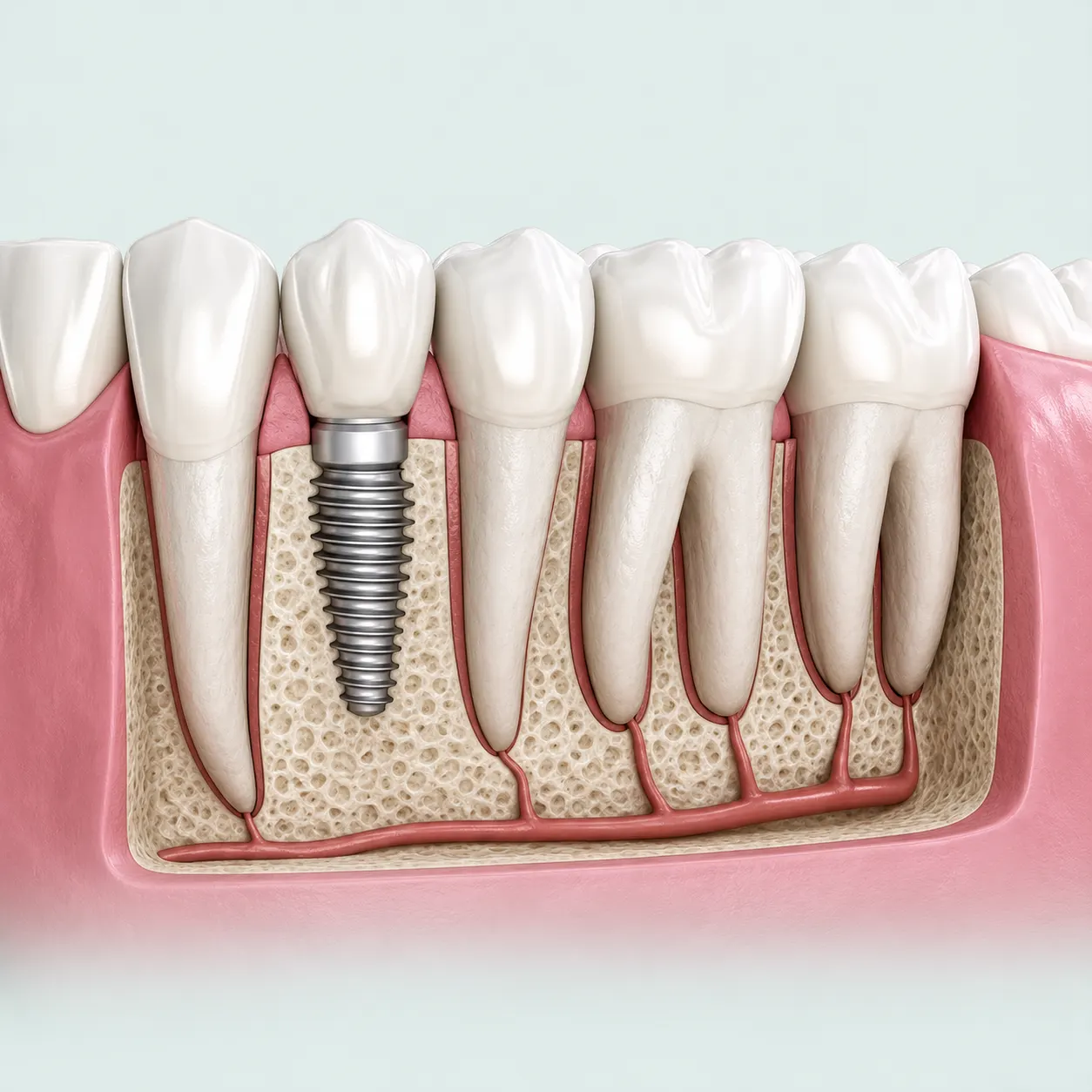
1 implant for 1 tooth
A single missing tooth
One implant carries one crown, in the exact place of the lost tooth. This is the only case where the count is one for one. Its advantage over a conventional bridge: the neighbouring teeth are left alone. A bridge means filing them down to take the supports, and they are often perfectly healthy.
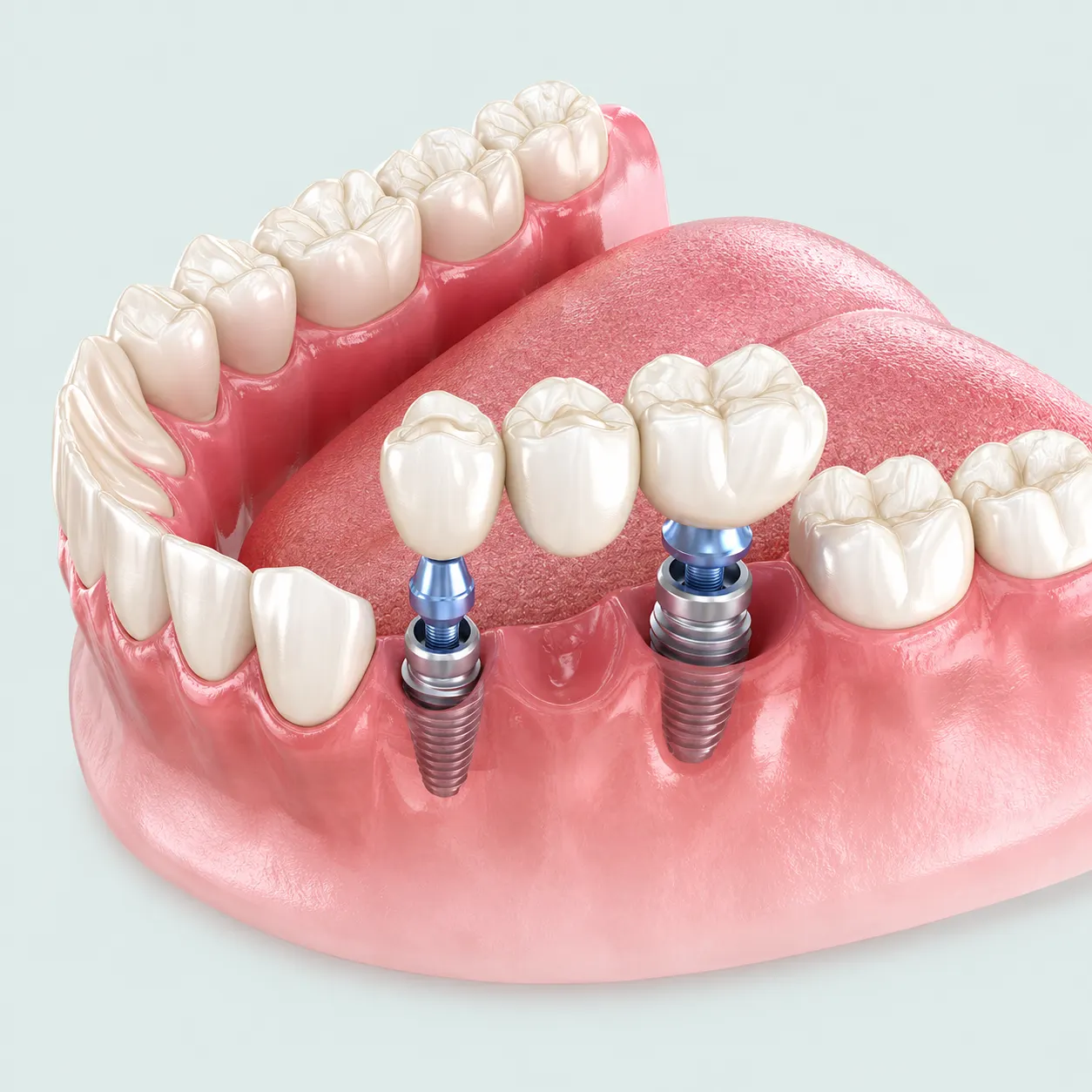
2 to 4 implants for 3 to 5 teeth
Several teeth side by side
An implant-supported bridge. Two implants placed at either end carry the teeth in between, with no need for one underneath every tooth. This is where the gap between the number of teeth and the number of implants is widest, and so is the gap with the price most people are bracing for.
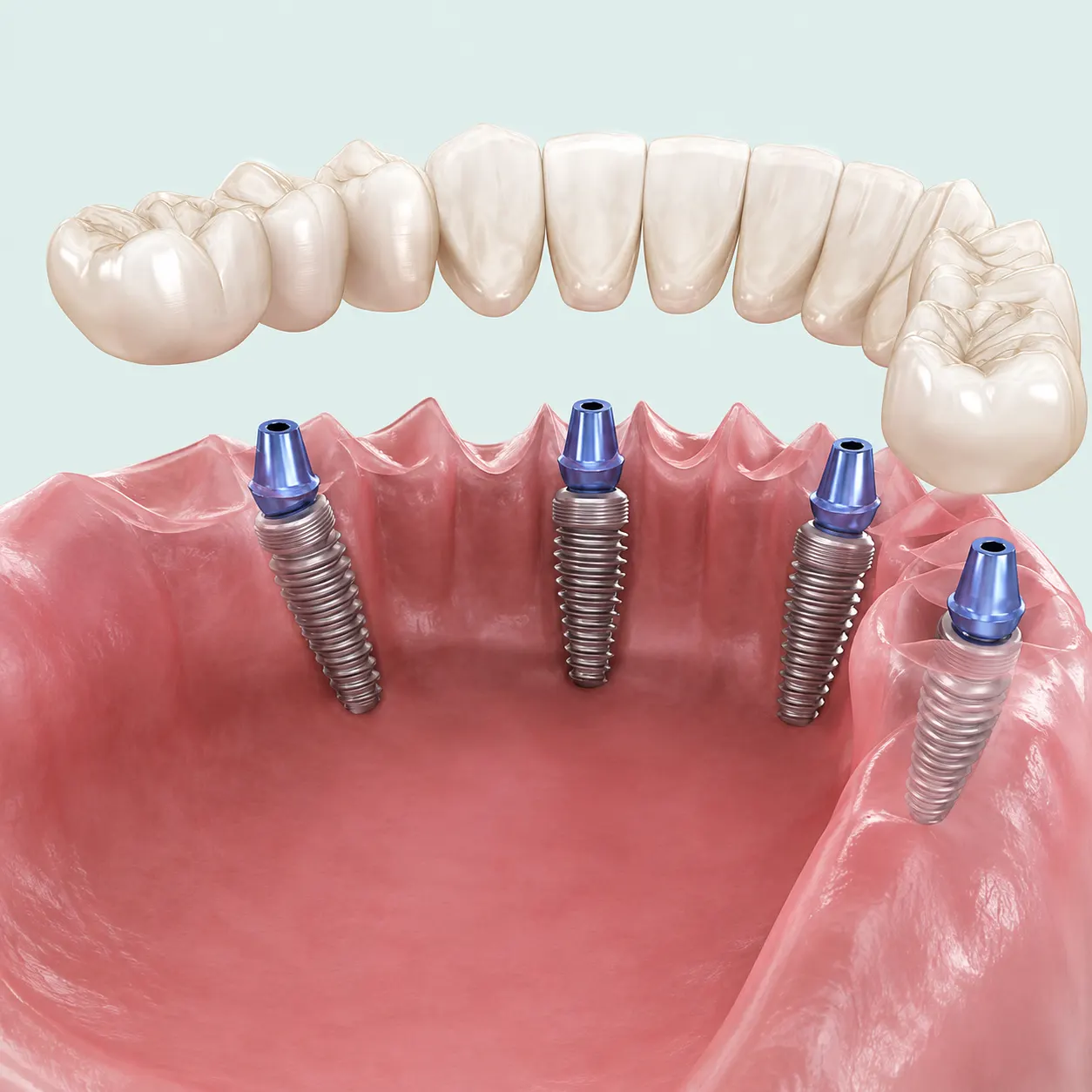
4 to 6 implants for a full arch
All the upper or lower teeth, fixed
A whole arch carried by four to six implants, with a fixed prosthesis screwed onto them. You do not take it out: only the practitioner removes it, for maintenance. Cleaning underneath it calls for a particular routine, which is shown to you. This is what patients ask for once they have worn a denture and want nothing removable again.
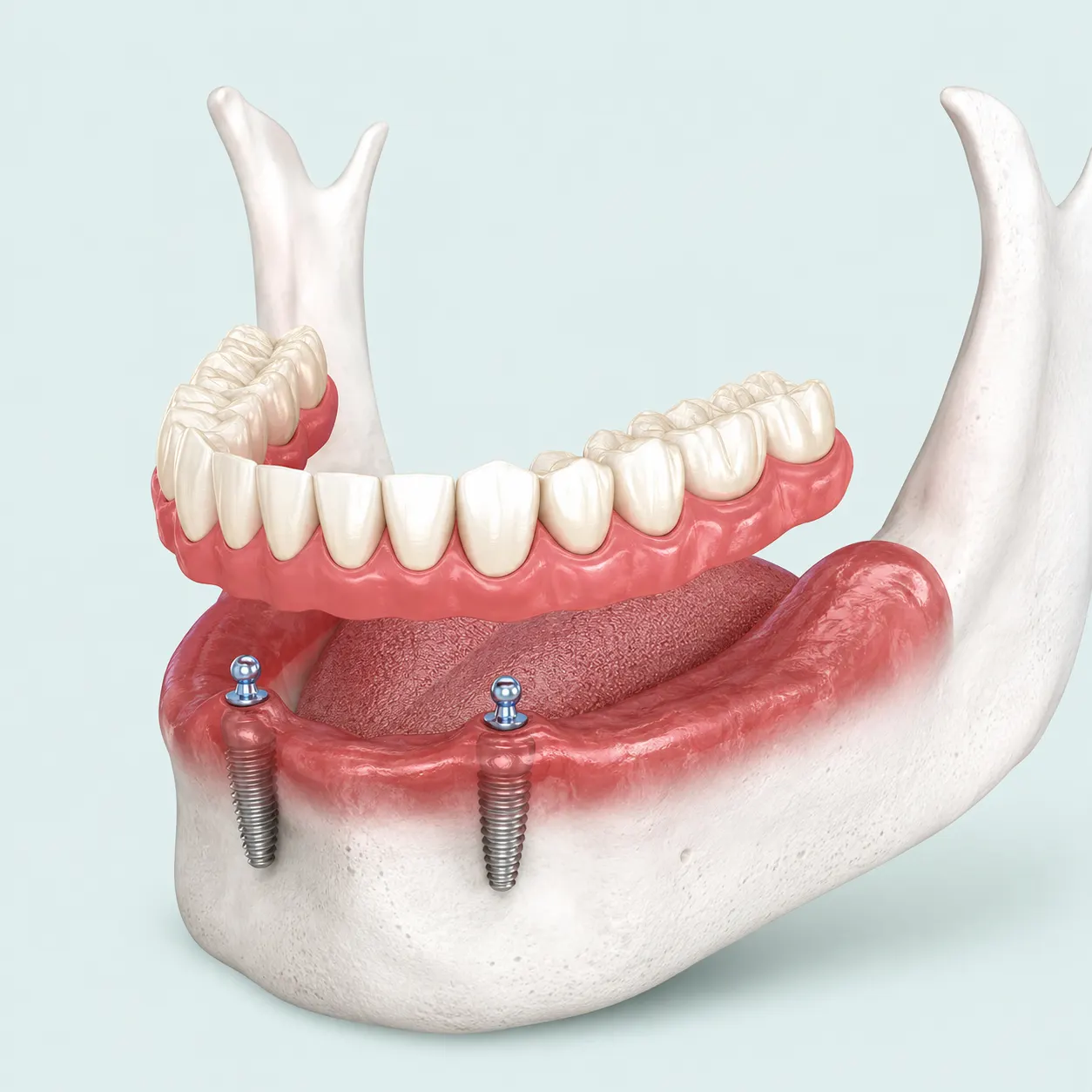
2 implants to stabilise a denture
A full arch, denture stabilised
Two implants fitted with attachments that the denture clips onto. It comes out for cleaning, but it no longer moves while you eat or speak. Two implants are generally enough in the lower jaw; in the upper jaw the bone often asks for more. It is the most economical route to a full arch, and often the first one considered when bone volume or budget rules out the fixed option.
What decides it in your case
These four situations give you the order of magnitude. The number settled on for you depends on what an examination and an X-ray show, and on what you want to achieve. In Birkhadem, Algiers, this implant consultation is free.
How much bone is there
This is the first thing looked at. Bone recedes where a tooth has been missing for a long time. If too much is gone, a bone graft can rebuild it. So a shortage of bone does not rule out an implant, but it changes the plan and the timeline.
Fixed or removable
For a full arch, this is the choice that weighs most. Fixed needs more implants and costs more; a denture stabilised on two implants costs less and comes out for cleaning. Neither is better in the abstract.
The state of your gums
An implant goes into a healthy environment. Inflamed gums are treated first, which can add a stage to the timeline.
The opposing arch
Upper and lower teeth work against each other. What sits opposite, whether natural teeth or a prosthesis, comes into the decision about how many implants and where they go.
The number of implants is the first thing that drives the price. See the price of a dental implant in Algeria
Your questions about the number of implants
Do you really need one implant for every missing tooth?
No, unless only one tooth is missing. As soon as several neighbouring teeth are gone, implants placed at either end carry the teeth in between: two implants for three teeth is the common configuration, and a third is added as the span gets longer. A full arch usually rests on four to six implants.
How many implants does a full arch need?
Four to six for a fixed prosthesis that does not come out. To stabilise a removable denture that clips on top, two implants are generally enough in the lower jaw, and more are often needed in the upper. The exact number depends on the bone available and on the solution chosen, and is settled after an examination and an X-ray.
Do more implants give a better result?
Not automatically. Beyond what the situation calls for, extra implants add surgery and cost without adding stability. The right number is the one that spreads the forces of chewing properly across the bone available. That is what the treatment plan works out.
Can all the teeth be replaced in one go?
The plan can cover a whole arch, but it does not finish in a single appointment: between placing the implants and fitting the final prosthesis, the bone needs several months to fuse to them. You are given the timeline with the quote, before anything starts.
Does the price depend on the number of implants?
Yes, it is the first factor. It is also why the number of missing teeth will not tell you the amount: three teeth replaced by two implants do not cost three implants. The starting price and the other factors are set out on the dental implant page.